
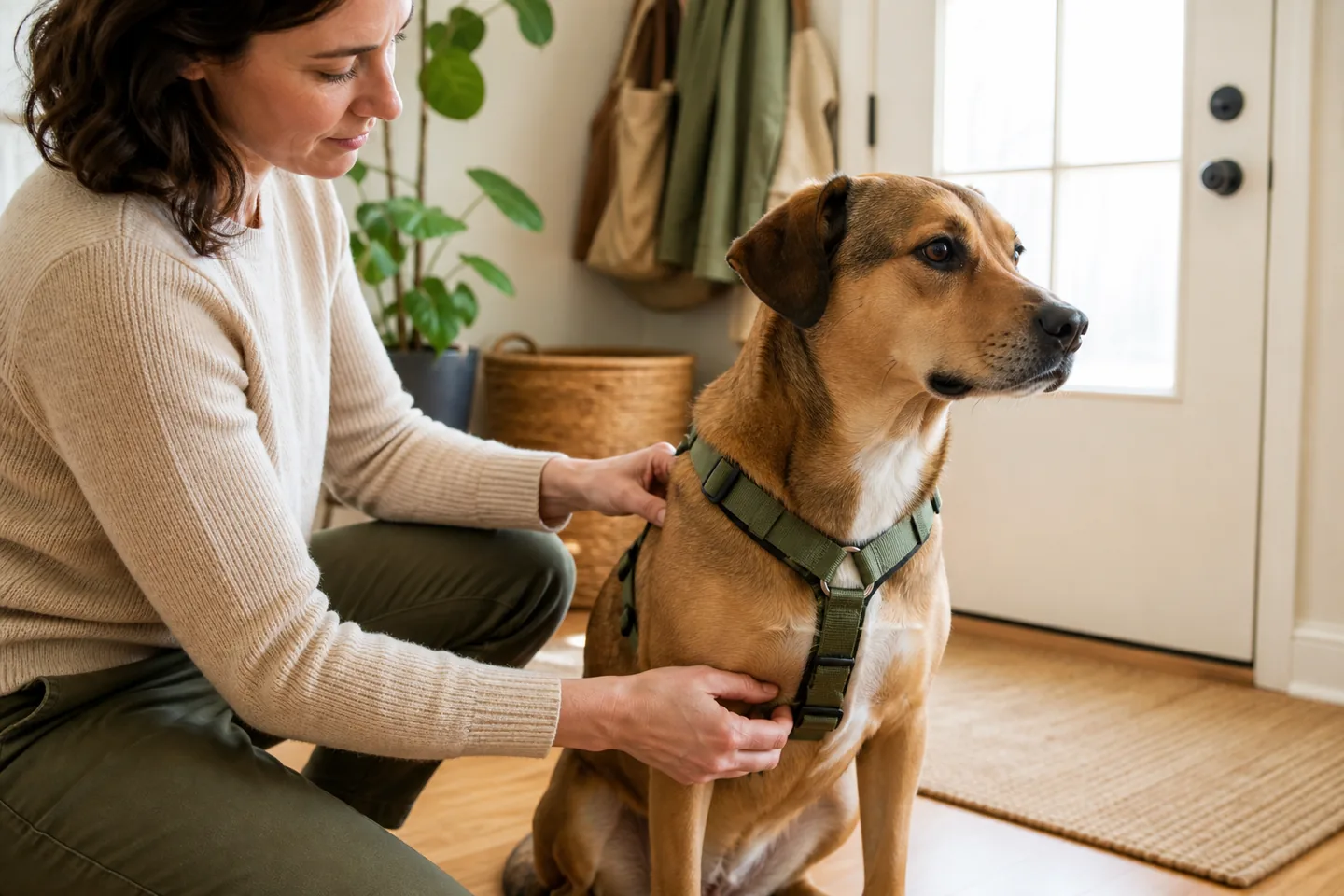
A harness can be useful for everyday walks, training, travel, and dogs who should avoid pressure concentrated at the neck. But a harness is only helpful when its shape and fit suit the individual dog.
Start with function rather than color or style. Consider where you walk, how your dog moves, whether escape prevention is important, and how easily you can put the harness on without creating stress.
Look at the shape across the chest
Many dogs move comfortably in a Y-shaped front that follows the breastbone and leaves room around the shoulder joints. Broad horizontal straps across the front of the shoulders may restrict stride on some dogs, especially when they sit low or tighten during movement.
No single design fits every body. Deep chests, narrow waists, broad shoulders, short legs, and thick coats all change how straps sit.
Measure before choosing a size
Follow the manufacturer’s measuring instructions and measure the dog standing naturally. Common measurements include the widest part of the rib cage and the lower neck or chest. When a dog falls between sizes, use the brand’s guidance rather than assuming larger is always safer.
Check the fit in several positions
- Slide fingers beneath each strap without forcing them.
- Confirm straps do not press into the armpits.
- Watch the shoulders while the dog walks and trots.
- Check that buckles do not sit on prominent bones.
- Make sure the harness cannot rotate excessively.
- Gently test whether the dog could back out.
Recheck after several minutes of movement. Fur can compress, straps can shift, and a fit that looks correct while standing may rub during a walk.
Choose attachment points for your goal
A back attachment is simple and keeps the leash away from the front legs. A front attachment may help redirect some dogs during training, but it should not twist the harness or interfere with gait. Dual-clip use can offer additional guidance when the equipment is designed for it.
A harness does not teach loose-leash walking by itself. Pair comfortable equipment with the gradual plan in our loose-leash walking guide.
Watch for discomfort
Stop and reassess if you notice chafing, hair loss, redness, reluctance to move, shortened steps, repeated scratching, or avoidance when the harness appears. Wash and dry the harness according to its instructions, and inspect webbing, stitching, rings, and buckles regularly.
For dogs with pain, breathing concerns, unusual anatomy, or rehabilitation needs, ask a veterinarian or qualified rehabilitation professional for individual guidance.