
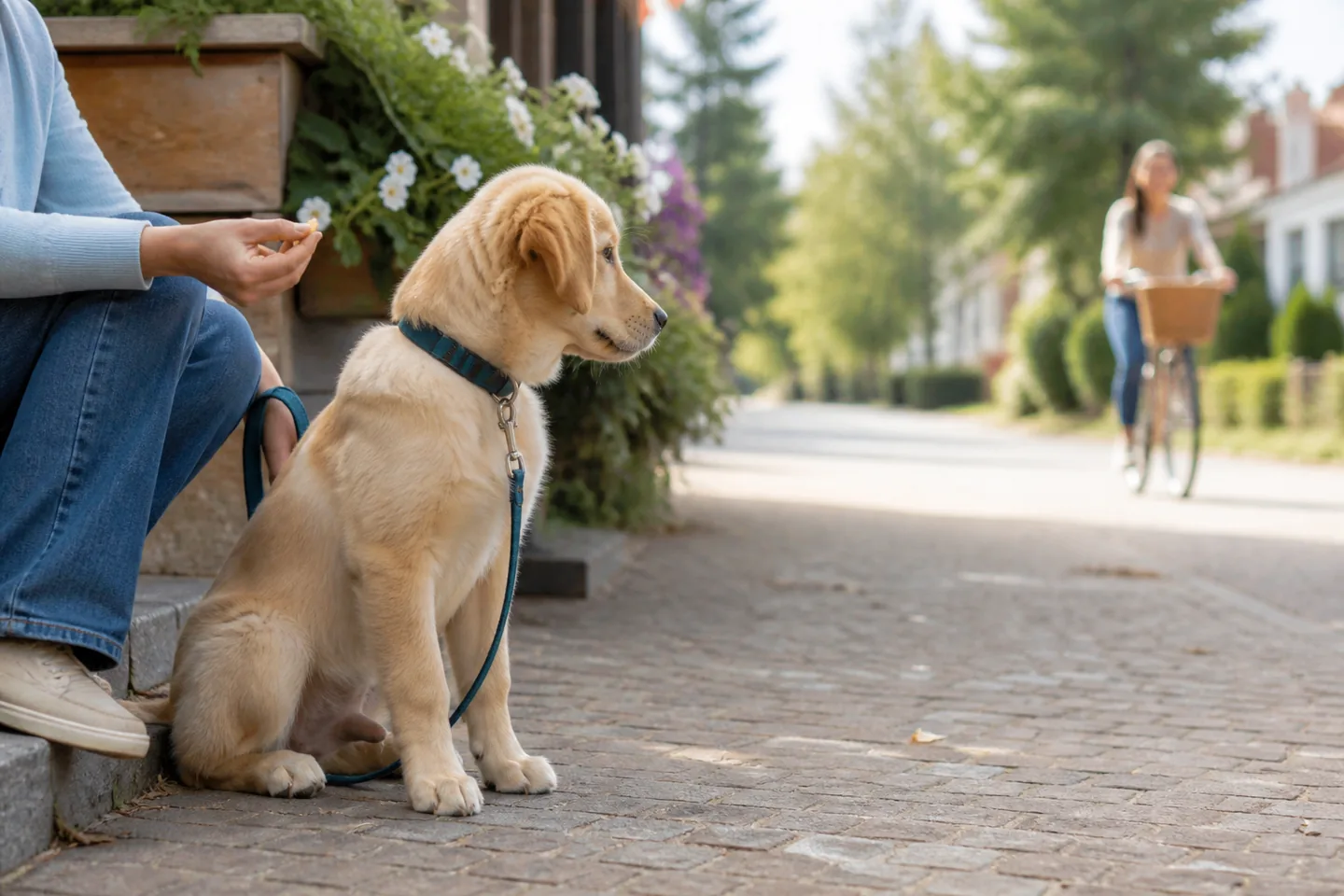
Good puppy socialization is not a race to meet the largest number of people, dogs, places, and objects. It is the process of helping a puppy form safe, positive, or neutral associations with the world.
Quality matters more than quantity. A puppy who watches a bicycle from a comfortable distance while eating treats may learn more than a puppy who is carried into a crowded event and cannot escape.
Work with your veterinarian on safe exposure
Puppies need thoughtful exposure while their vaccination series is still in progress. Disease risk varies by location and circumstance. Ask your veterinarian which environments, puppy classes, visitors, and known healthy dogs are appropriate for your puppy.
Avoid high-risk areas when advised, but do not assume the puppy must experience complete isolation. Safe car rides, being carried in suitable places, watching activity from a clean blanket, and meeting carefully selected people can provide useful exposure.
Let distance do some of the work
Your puppy does not need to touch something to learn about it. Begin far enough away that the puppy can notice the experience and still eat, sniff, look away, or respond to you.
If the puppy freezes, hides, tries to flee, refuses food, barks repeatedly, tucks the tail, or cannot recover, increase distance or leave. Those signals are information, not disobedience.
Pair new experiences with good outcomes
Use tiny treats, play, calm praise, or permission to move away. Keep the experience short and stop while the puppy is still comfortable. One successful minute is more useful than ten stressful minutes.
Do not lure a worried puppy closer than they would choose to go. Reward observation and voluntary curiosity. Choice helps build confidence.
Build a balanced exposure list
- People with different appearances, movements, and voices
- Household sounds at gentle volume
- Surfaces such as grass, carpet, tile, gravel, and safe metal grates
- Vehicles, bicycles, carts, umbrellas, and delivery activity at a distance
- Gentle handling of paws, ears, collar area, and body
- Calm time alone and settling while normal life happens nearby
- Healthy, socially appropriate dogs selected with care
Avoid forced greetings
Not every person or dog needs to say hello. Protect your puppy from being crowded, grabbed, chased, or passed between strangers. Ask people to wait for the puppy to approach and to interact gently.
Dog parks and uncontrolled groups are not necessary for socialization. A well-run reward-based puppy class with appropriate health requirements may offer a more structured option.
Repeat easy wins
One exposure does not create a lifelong skill. Revisit experiences in slightly different forms while keeping them manageable. Pair socialization with the calm home foundation in our puppy’s first-week checklist.
If fear is intense, persistent, or getting worse, contact your veterinarian and a qualified reward-based behavior professional early. Gentle early support can prevent repeated frightening experiences from becoming a pattern.