
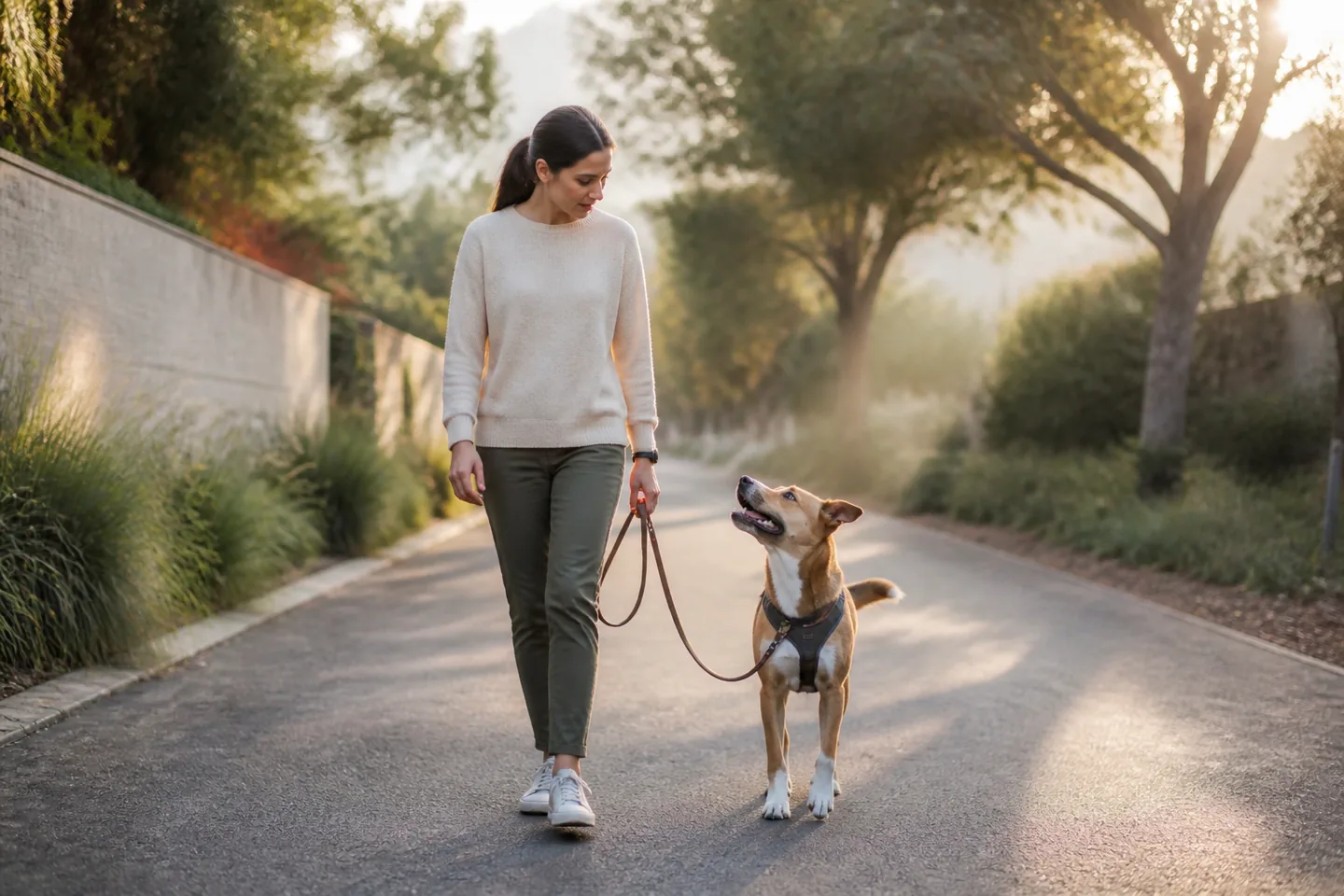
Loose-leash walking is not about making a dog march in one exact position. It means the leash stays comfortable enough that dog and owner can move together without constant pulling, bracing, or conflict.
Dogs pull for understandable reasons: the environment is exciting, moving forward is rewarding, their walking pace is faster, or they have not yet learned what works. A calm plan changes the outcome of pulling while rewarding the choices you want.
Set up the walk for success
Use a well-fitted harness or comfortable collar appropriate for your dog, a standard fixed-length leash, and small rewards your dog values. Avoid tools that depend on pain, fear, or sudden corrections.
Begin somewhere boring enough that your dog can still eat, look at you, and move without becoming overwhelmed. A hallway, driveway, quiet sidewalk, or calm parking area may be more useful than a busy trail.
Teach the easy version first
Stand with the leash loose. Mark and reward any voluntary attention, movement toward you, or choice to remain near you. Take one or two steps, then reward while the leash is still slack. Repeat in short sessions.
Reward where you would like the dog to return, usually beside your leg rather than far ahead. This creates a useful reinforcement area without forcing one rigid position.
What to do when the leash tightens
When the leash becomes tight, stop forward movement or calmly change direction before the dog reaches the end. The moment the dog releases pressure, turns back, or returns toward you, reward and continue.
Consistency matters. If pulling sometimes produces fast access to a smell, person, or dog, the behavior remains worthwhile. You can still use sniffing as a reward: ask for a few loose steps, then release your dog to investigate a safe spot.
Keep practice short and achievable
A ten-minute training walk can be more productive than a long, frustrating outing. Your dog may also need separate opportunities to sniff, explore, and exercise without being asked for polished leash skills every second.
Increase only one challenge at a time. Add a little distance before adding a busier location. If your dog stops taking food, cannot disengage from the environment, or repeatedly lunges, create more distance and return to an easier setting.
Plan for common distractions
- People: move to the side and reward calm observation before they pass.
- Dogs: increase distance early instead of waiting for the leash to become tight.
- Wildlife: use distance, a cheerful turn, and high-value rewards.
- Interesting smells: make access to sniffing a reward for a few comfortable steps.
Measure progress fairly
Look for longer stretches of slack leash, quicker check-ins, easier recovery after distractions, and less tension in your own body. Progress is rarely perfectly linear.
Pair the plan with a predictable daily routine and gear that fits well. If pulling is driven by intense fear, frustration, or aggression, seek help from a qualified reward-based professional.