
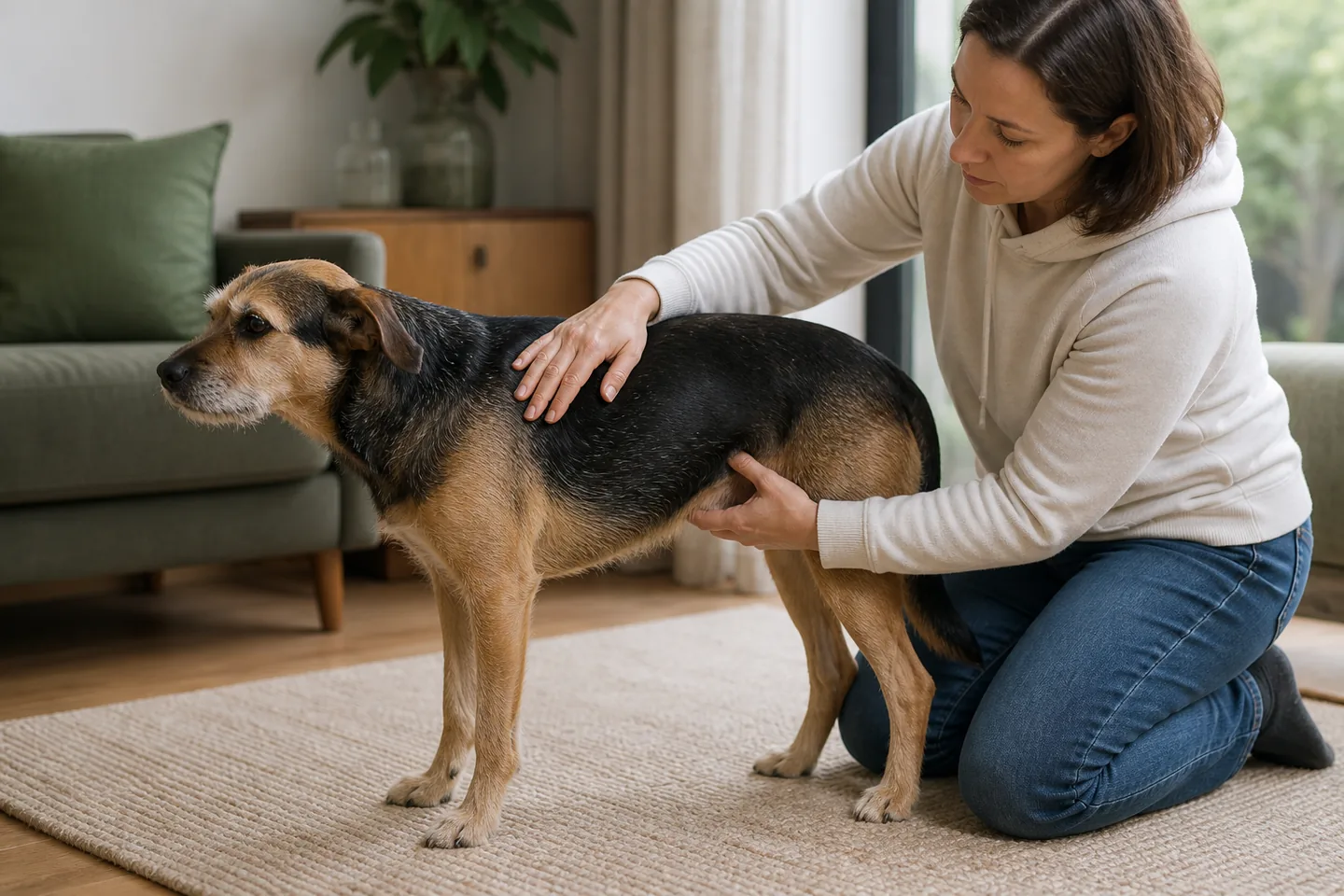
A number on the scale is useful, but it does not tell the whole story. Dogs of the same weight can have different frames, muscle mass, coat types, and healthy shapes. A body-condition check combines what you see with what you can gently feel.
This quick home check is not a diagnosis and does not replace veterinary assessment. It can help you notice gradual changes and give your veterinarian clearer information.
Look at the whole dog
Choose a time when your dog is relaxed and standing naturally on a secure surface. Look from the side and from above. Avoid judging from one photograph or one angle, especially with thick-coated dogs.
Many dogs at a healthy condition have a visible waist behind the ribs when viewed from above. From the side, the abdomen often rises behind the rib cage. Breed structure matters, so compare your dog with their own normal shape rather than an unrelated breed.
Gently feel the ribs
Run flat fingers lightly across the rib area. In many healthy dogs, the ribs are easy to feel beneath a thin covering of tissue without pressing hard. Ribs that are very difficult to find may suggest excess body fat. Ribs, spine, or hip bones that are sharply prominent may suggest that a dog is too thin or losing muscle.
Do not poke, squeeze, or continue if handling is uncomfortable. Pain, flinching, or a new dislike of touch deserves veterinary attention.
Notice the waist and abdominal shape
Viewed from above, look for a narrowing between the ribs and hips. Viewed from the side, notice whether the abdomen has a gentle upward tuck. Some breeds naturally have a stronger or softer tuck, and age can change muscle tone.
A long coat can hide body shape. Use your hands gently to understand what is beneath the fur, and ask a groomer or veterinarian for help if you are unsure.
Track trends instead of reacting to one day
Check body condition about once a month under similar conditions. If possible, record weight, take a simple standing photo, and note appetite, activity, treats, and recent health changes. Small trends are more informative than daily fluctuations.
Unexpected weight loss or gain can occur even when feeding has not changed. Contact your veterinarian when a change is unexplained, rapid, or accompanied by increased thirst, vomiting, diarrhea, weakness, breathing changes, pain, or a major appetite change.
Connect the check to daily feeding
If your veterinarian recommends a portion adjustment, make it gradually and measure food consistently. Include treats, chews, and toppers in the daily picture. Our guide to choosing a sensible feeding portion explains how labels and activity level fit into that decision.
A simple monthly checklist
- Look for a waist from above.
- Notice the abdominal shape from the side.
- Feel the ribs with light pressure.
- Record weight when practical.
- Note changes in appetite, activity, comfort, or muscle.
- Ask your veterinarian when you are unsure.
The purpose is not to chase a perfect appearance. It is to notice change, support comfortable movement, and make feeding decisions with better information.