
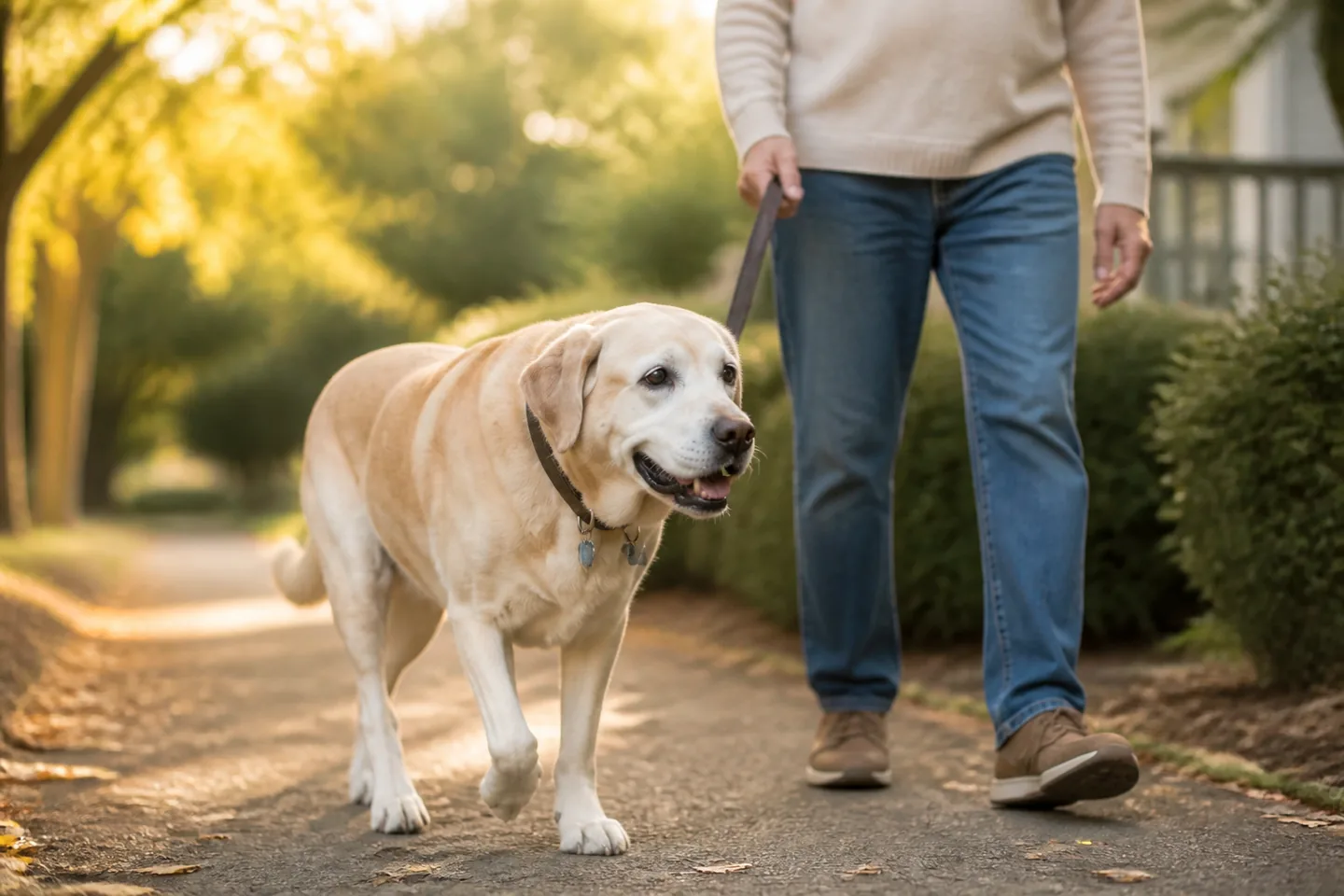
Older dogs often still want to participate in family life even when their pace changes. Thoughtful adjustments can help them move with confidence, rest comfortably, and enjoy the routines that make each day familiar.
Aging is not a diagnosis. New stiffness, weakness, confusion, appetite changes, or reluctance to move deserve veterinary attention rather than being dismissed as ‘just old age.’
Notice small changes early
Watch how your dog rises, uses stairs, turns on smooth floors, settles at night, and recovers after activity. Changes are easier to address when you notice patterns early. A short weekly note or video can help you describe them accurately at a veterinary visit.
Choose shorter, steadier movement
Many senior dogs do better with several gentle outings than one exhausting adventure. Let your dog sniff, warm up gradually, and set a comfortable pace. Avoid sudden increases in distance or intensity. On hot, cold, or slippery days, shorten the outing and add calm indoor enrichment instead.
Do not assume that a slow dog needs no exercise. Appropriate movement helps maintain strength, routine, and engagement. Your veterinarian can help tailor activity when arthritis, heart disease, breathing problems, or other conditions are present.
Improve traction and access
- Place washable runners or nonslip mats on frequently used smooth floors.
- Keep nails and paw fur maintained so the feet can grip comfortably.
- Use a stable ramp where jumping into a vehicle has become difficult.
- Keep food, water, and resting areas easy to reach.
- Block unsafe stairs if balance or vision has declined.
Create restful sleeping spots
A supportive bed in a quiet, draft-free area can make settling easier. Some dogs like a low-edged bed they can step into; others need more room to change position. Provide a comfortable option near the family as well as a quieter retreat.
Keep the mind involved
Enrichment does not have to be strenuous. Slow sniff walks, scatter feeding, simple searches, food puzzles, gentle grooming, and familiar training cues can add interest. Keep sessions short enough that your dog finishes relaxed rather than frustrated or tired.
Build a senior-friendly routine
Predictable mealtimes, bathroom breaks, medication schedules, activity, and rest reduce unnecessary effort. Revisit your dog’s gear as their body changes; the principles in our dog gear guide can help you focus on fit and comfort.
Regular veterinary checkups are especially important in the senior years. Seek prompt advice for sudden pain, collapse, breathing difficulty, inability to stand, major behavior changes, or refusal of food or water.