
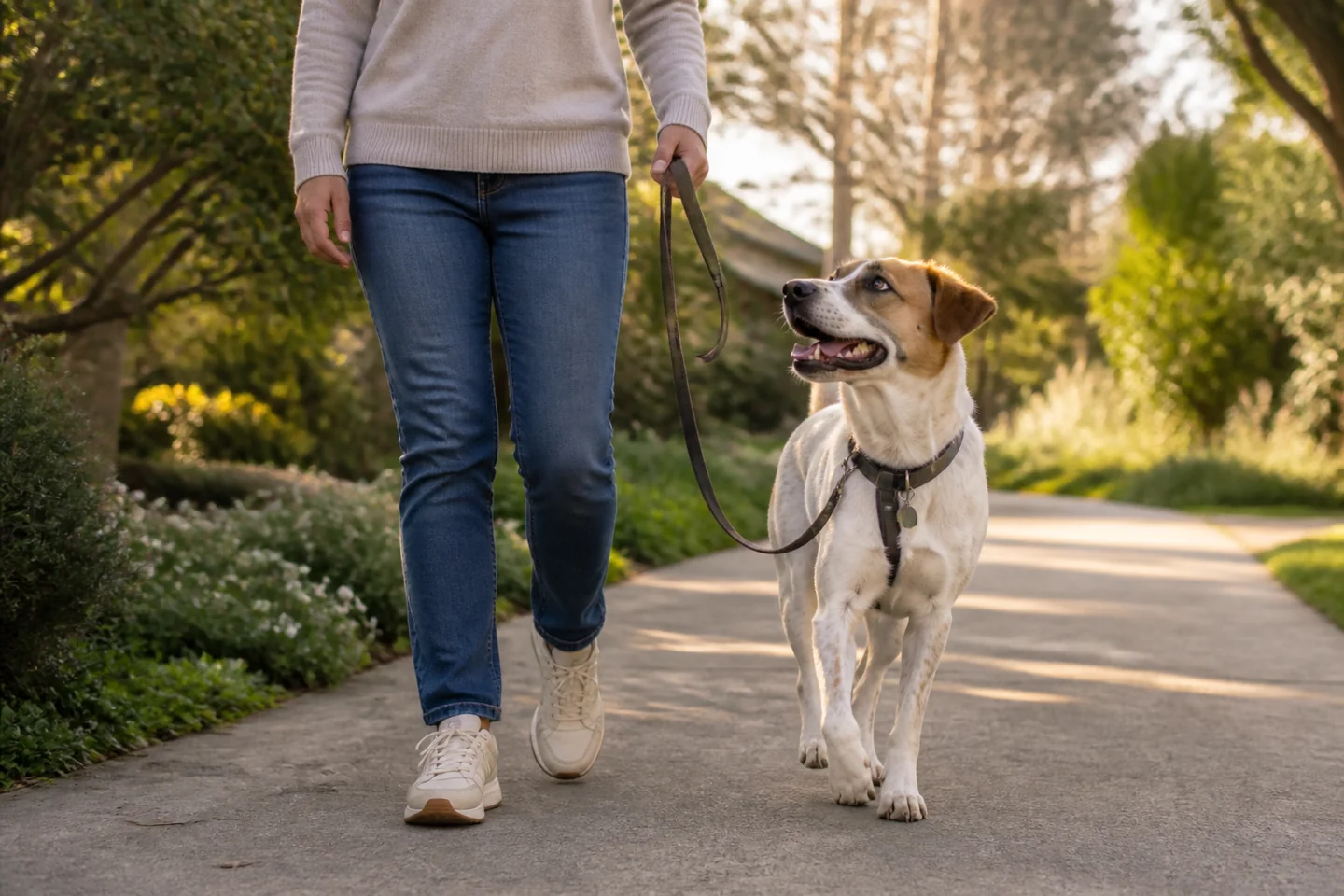
A good routine does not need to schedule every minute of your dog’s day. Its real purpose is to create a dependable rhythm: active time is followed by calm time, needs are met before frustration builds, and your dog learns what usually happens next.
The best routine is one you can repeat on ordinary days. Start simple, watch how your dog responds, and adjust for age, health, energy level, and personality.
Begin with a calm morning
Give your dog an opportunity to go outside soon after waking. Follow that with breakfast, fresh water, and an age-appropriate walk or sniffing session. Sniffing is not wasted time—it gives dogs a natural way to explore and process their environment.
A high-energy dog may enjoy more movement, while a puppy, senior dog, or dog with physical limitations may need a shorter and gentler outing. The goal is not exhaustion. It is a satisfying start to the day.
Alternate activity with real rest
Many dogs need help learning that nothing is happening. After exercise, offer a comfortable resting place away from constant household traffic. A predictable quiet period can reduce overtired behavior and make it easier for dogs to settle on their own.
If your dog paces, demands attention, or becomes more excitable after a busy period, consider whether they need less stimulation and more uninterrupted sleep.
Add small moments of enrichment
Enrichment does not need to be complicated. Scatter part of a meal in the grass, use a food puzzle, practice two or three familiar cues, rotate safe toys, or let your dog investigate a new walking route.
Five focused minutes can be more useful than a long, frustrating session. End while your dog is still engaged and successful.
Make connection part of the routine
Dogs benefit from attention that is not tied to correcting behavior. Calm affection, grooming, play, and simply sharing space all help strengthen your relationship. Notice which kinds of interaction your dog actively enjoys rather than assuming every dog wants the same thing.
Keep evenings predictable
An evening walk, a final bathroom break, and a consistent wind-down period can help signal that the day is ending. Lower the household energy, put stimulating toys away, and make the sleeping area comfortable.
A routine should stay flexible
Weather, work, travel, and life will interrupt the plan. That is normal. Keep a few anchors—meals, bathroom opportunities, movement, rest, and connection—then adjust the details around them.
If your dog suddenly cannot settle, loses interest in normal activities, or shows a significant behavior change, consult your veterinarian. Changes in behavior can sometimes have a physical cause.