
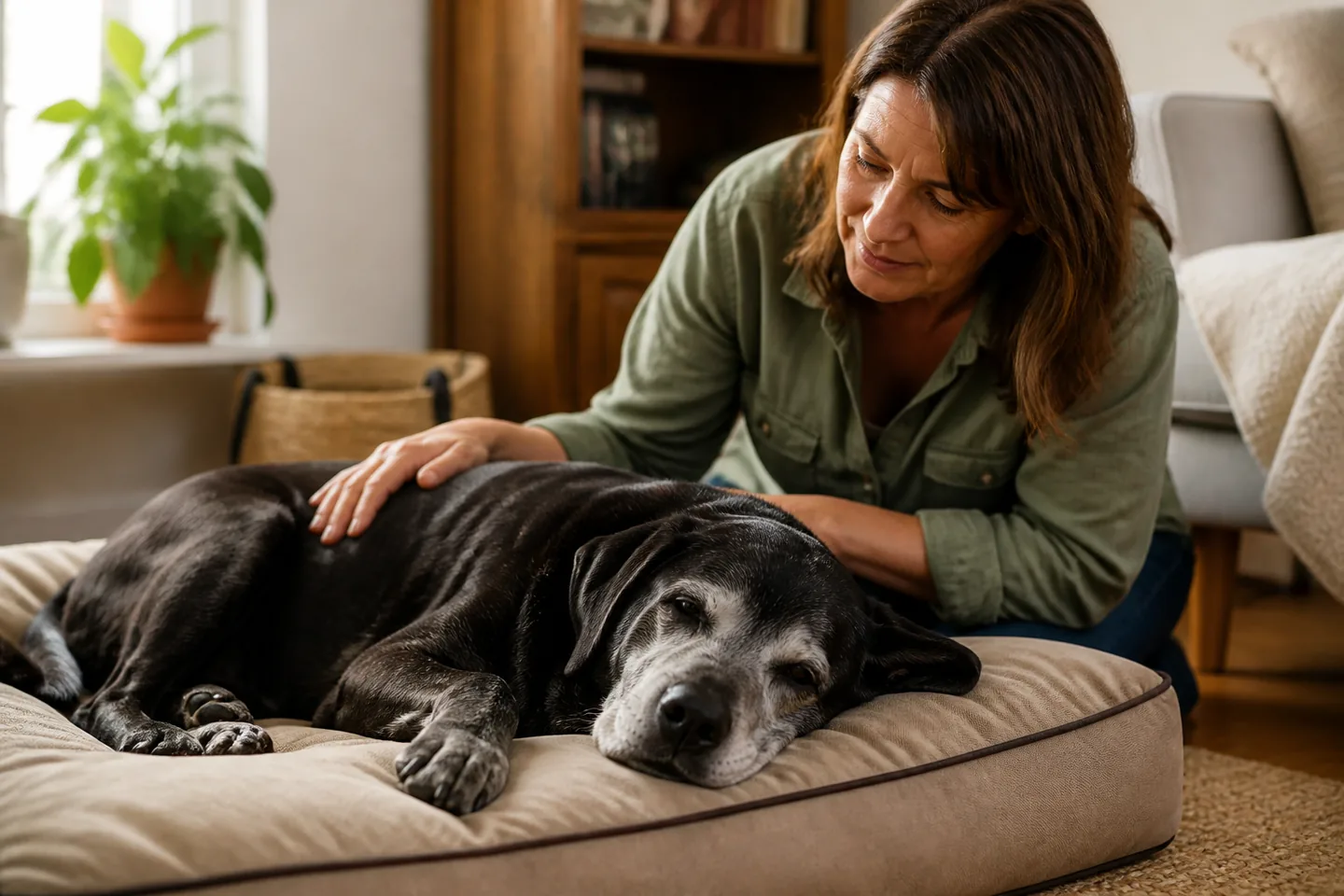
Senior dogs often slow down or change their routines, but age should never be used to dismiss pain, illness, or sudden behavior changes. Many conditions are easier to manage when they are recognized early.
Your dog’s normal matters. A small weekly note about movement, appetite, sleep, bathroom habits, and social behavior can make gradual trends easier to describe at a veterinary visit.
Gradual changes worth discussing
Older dogs may sleep more, take longer to recover after activity, develop gray hair, lose some hearing or vision, or need more time to rise. These changes can be part of aging, but they still belong in regular veterinary conversations.
Stiffness, hesitation on stairs, slipping, nighttime restlessness, new house-soiling, confusion, or reduced interest can also reflect treatable pain or disease. Do not assume they are unavoidable.
Changes that need a veterinary appointment
- Unexplained weight loss or gain
- Persistent change in appetite or thirst
- New coughing, panting, or reduced stamina
- Repeated vomiting, diarrhea, or constipation
- New lumps, sores, odor, or bleeding
- Difficulty rising, limping, or reluctance to move
- Major sleep, anxiety, or behavior changes
Warning signs that may be urgent
Seek prompt or emergency veterinary help for collapse, difficulty breathing, uncontrolled bleeding, repeated unproductive retching, a swollen abdomen, seizures, inability to stand, severe pain, sudden paralysis, suspected poisoning, or inability to urinate.
If you are uncertain whether a situation is urgent, call a veterinary clinic and describe what you see. Do not wait for an article to match every symptom.
Prepare useful observations
Record when the change began, whether it is constant or intermittent, recent food or medication changes, bathroom patterns, and anything that makes it better or worse. Short videos of walking, breathing, coughing, or unusual behavior can be useful when safely recorded.
Support comfort between visits
Provide secure footing, easy access to water and resting areas, predictable bathroom breaks, and appropriately gentle activity. Our guide to supporting a comfortable senior dog offers practical home adjustments.
Never start, stop, or change medication without veterinary direction. Human pain relievers can be dangerous to dogs.
Aging changes the care plan, not the value of care. Close observation and timely veterinary support can protect comfort and quality of life.