
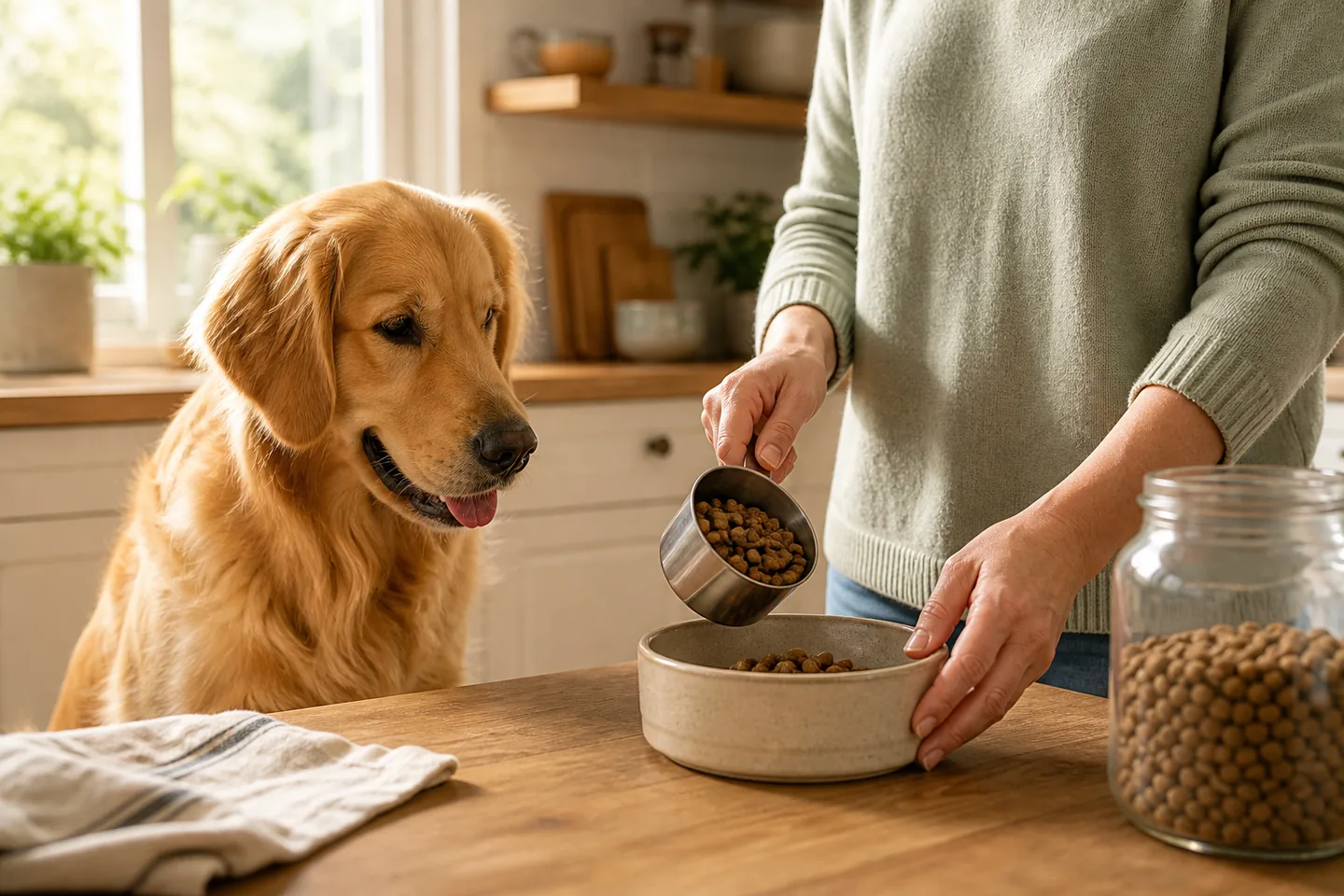
Feeding charts can make dinner look like a simple math problem, but the number on a bag is only a starting point. Two dogs of the same weight may need different amounts because age, activity, body condition, health, and even the calorie density of their food can vary.
The goal is not to find one perfect scoop forever. It is to choose a reasonable starting portion, watch how your dog responds, and make small, thoughtful adjustments.
Begin with the food’s calorie information
Look for calories per cup, can, tray, or kilogram on the package. ‘One cup’ is not a universal amount: different foods can provide very different calories in the same volume. Use the feeding chart for your dog’s current healthy weight–or the target weight recommended by your veterinarian–not simply the largest suggested serving.
If you combine wet and dry food, treats, toppers, or chews, all of them contribute to the daily total. Measure each part rather than filling the bowl by eye.
Use body condition, not appetite alone
Many dogs will happily ask for more food after receiving enough. Appetite is useful information, but it does not reliably show how many calories a dog needs. A healthy body condition is a better guide.
- You should usually be able to feel the ribs beneath a light covering of tissue without pressing hard.
- Viewed from above, many dogs should have a visible waist behind the ribs.
- Viewed from the side, the abdomen often tucks upward behind the rib cage.
Breed, coat, and body shape affect appearance, so ask your veterinarian to show you how to assess your individual dog.
Count treats and training rewards
Treats can quietly become a large part of a dog’s day, especially during training. Set aside part of the regular meal to use as rewards, choose small treats, or break larger treats into tiny pieces. The dog experiences the reward each time; it does not need to be large.
Make changes gradually
Keep the starting amount consistent for a couple of weeks unless your veterinarian advises otherwise. Weigh your dog when practical and notice changes in waist, ribs, energy, stool quality, and hunger. If adjustment is needed, change the daily total by a small amount rather than making a dramatic cut or increase.
Puppies, pregnant or nursing dogs, highly athletic dogs, seniors, and dogs with medical conditions have special needs. Their feeding plan should be discussed with a veterinarian.
A simple daily routine
- Measure the full day’s food in the morning.
- Divide it between meals and training rewards.
- Keep a brief note of calorie-rich extras.
- Review body condition and weight regularly.
- Adjust slowly and seek professional guidance when changes are unexpected.
Consistency makes feeding easier to evaluate. Pair it with a predictable daily routine, fresh water, suitable activity, and regular veterinary care.