
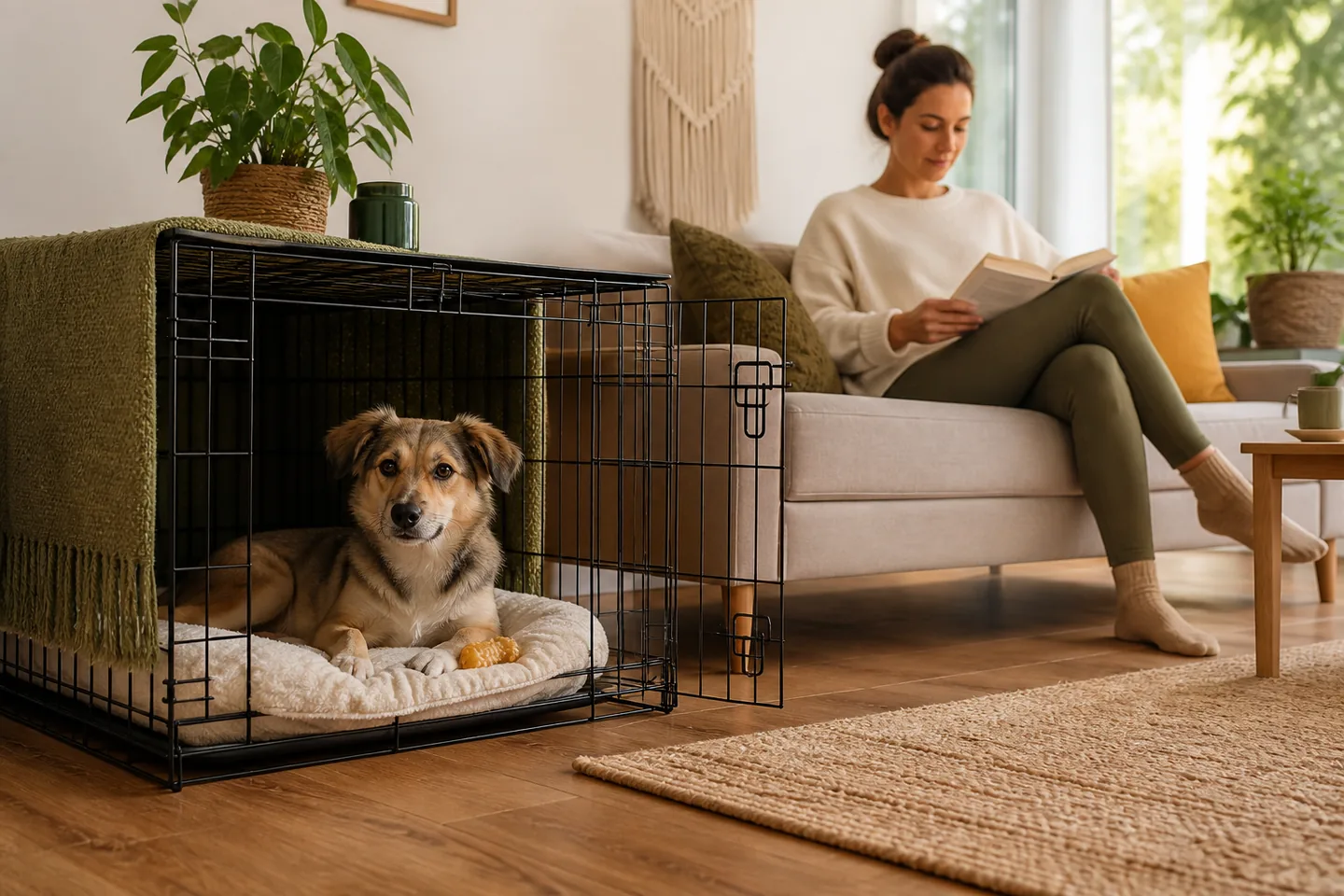
Crate training works best when the crate feels like a safe resting place, not a punishment. Some dogs investigate immediately. Others need days or weeks of patient practice. The goal is not to shut the door as quickly as possible; it is to build genuine comfort one small step at a time.
Choose a comfortable setup
Select a crate large enough for your dog to stand, turn around, and lie down naturally. Put it in a calm part of the home where your dog can still feel included. Add comfortable, washable bedding if your dog does not chew fabric, and keep the door secured open during early practice.
Remove collars and harnesses before unsupervised crate time because tags and straps can catch on crate hardware. The crate should also stay away from direct heat, cold drafts, and intense sun.
Build positive associations first
- Let your dog explore. Toss a treat just inside, then allow your dog to leave. Never push or pull them into the crate.
- Move rewards gradually. Place treats farther inside only when your dog is approaching comfortably.
- Serve meals nearby. Begin at the entrance and move the bowl inward over several meals.
- Add a relaxation cue. Reward quiet lying down inside while the door remains open.
Keep early sessions short. Three relaxed two-minute practices are more useful than one long session that leaves your dog worried.
Introduce the door in tiny steps
Once your dog willingly rests inside, briefly touch the door and reward calm behavior. Next, move it an inch, then close it for one second and reopen it. Build duration slowly while you remain nearby. Give a safe food toy when appropriate, but do not use food to trap a hesitant dog.
Vary the routine so the crate does not always predict that you are leaving. Sometimes open the door after a few seconds. Sometimes sit nearby. Sometimes practice while preparing dinner.
Know when to slow down
Panting when the room is cool, repeated yawning, drooling, frantic scratching, escape attempts, refusal of favorite food, or a tightly tucked posture can signal distress. Open the door when it is safe, make the next session easier, and review your pace.
Do not leave a puppy or adult dog crated longer than they can comfortably manage. Age, health, housetraining, exercise, and individual temperament all matter. A crate is not a substitute for walks, enrichment, companionship, or appropriate bathroom breaks.
Troubleshoot common setbacks
If your dog cries briefly because they are adjusting, stay calm and look for a quiet pause before opening the door when possible. If the behavior escalates or looks panicked, waiting it out can worsen the fear. Return to open-door practice and much shorter intervals.
Dogs with separation anxiety or a history of confinement distress may injure themselves trying to escape. Ask your veterinarian or a qualified reward-based behavior professional for an individualized plan rather than relying on a crate alone.
A simple definition of success
Successful crate training looks pleasantly ordinary: your dog enters willingly, settles with loose body language, and can rest for an appropriate period. Follow your dog’s comfort, reward the behavior you want, and let steady progress matter more than speed.