
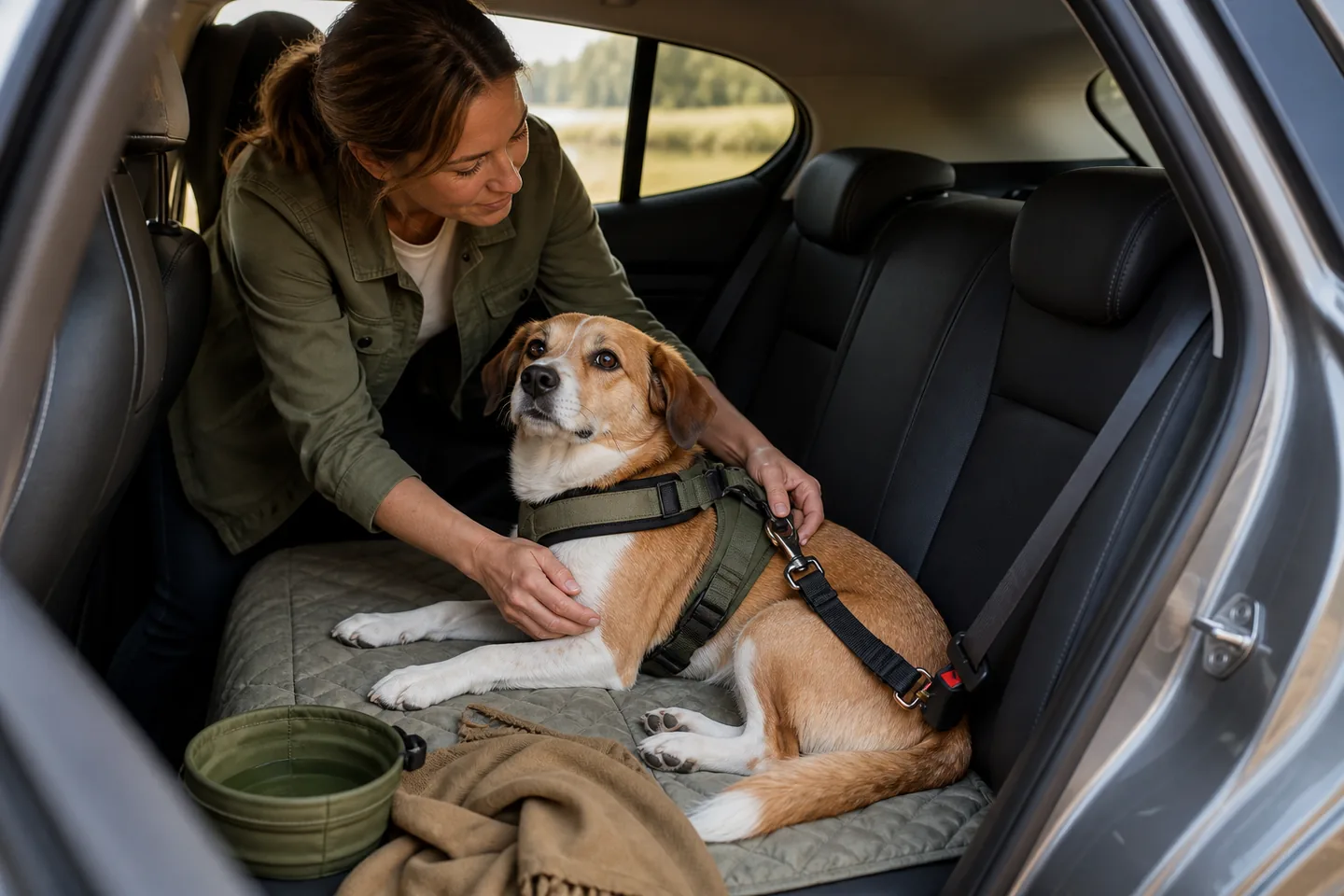
Safe car travel starts before the engine turns on. A thoughtful restraint setup, gradual practice, and a small travel kit can protect your dog and reduce distractions for the driver. Whether the trip lasts ten minutes or a full day, the same basics apply.
Use an appropriate restraint
A loose dog can be injured in a sudden stop and can interfere with driving. Keep your dog in the rear seating area using a properly fitted vehicle safety harness designed for car travel or a secured, appropriately sized travel crate. Follow the manufacturer’s instructions and check independent crash-testing information where available.
Do not attach a seat-belt tether to a collar. Sudden force on the neck can cause serious injury. Keep the tether short enough to prevent roaming while still allowing a comfortable seated or lying position.
Practice before a long trip
- Let your dog explore the parked car with the engine off.
- Reward calm behavior around the restraint or crate.
- Turn on the engine for a brief session without moving.
- Take a short drive around the block and return home.
- Increase duration gradually, ending before your dog becomes overwhelmed.
Use a secure leash before opening any exterior door. In unfamiliar areas, verify that identification tags and microchip contact details are current.
Pack a simple dog travel kit
- Fresh water and a travel bowl
- Leash, harness, identification, and waste bags
- Regular food and necessary medication
- A familiar blanket or mat
- Veterinary and emergency contact information
- Cleaning supplies and a recent photo of your dog
Avoid a large meal immediately before travel if your dog becomes carsick, but do not change medication or feeding routines without veterinary guidance.
Manage heat and airflow carefully
Never leave a dog unattended in a parked vehicle. Interior temperatures can rise dangerously even on a mild day, and cracked windows do not make a hot car safe. Use climate control while occupied and check that airflow reaches the rear area.
Keep windows high enough that your dog cannot put their head outside. Flying debris can injure eyes and ears, and an open window creates an escape risk.
Plan comfortable breaks
On longer trips, schedule regular stops in safe locations for water, bathroom needs, and gentle movement. Keep your dog leashed before opening the car. Puppies, seniors, and dogs with medical conditions may need more frequent breaks.
Watch for heavy drooling, lip licking, repeated swallowing, whining, vomiting, trembling, or inability to settle. These can reflect motion sickness, anxiety, overheating, or another problem.
Know when to call your veterinarian
If gradual practice does not improve travel distress, ask your veterinarian about possible motion sickness, pain, or anxiety. Never give human motion-sickness medicine or sedatives unless your veterinarian specifically prescribes them for your dog.
Before crossing state or national borders, confirm current health-certificate, vaccination, and entry requirements. With secure restraint and patient preparation, car travel becomes safer for your dog, the driver, and everyone else on the road.