
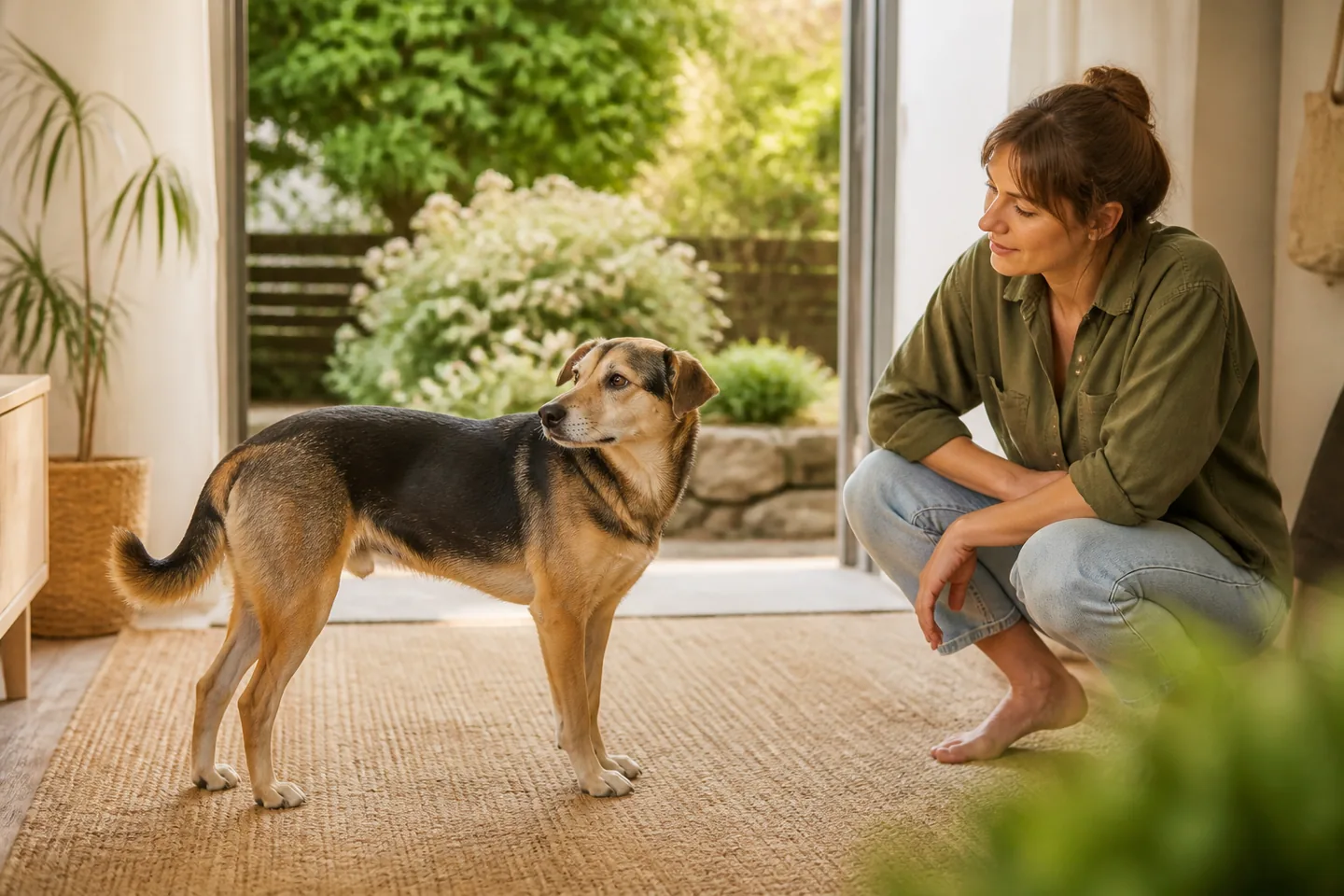
Dogs communicate constantly through posture, movement, facial expression, and distance. No single signal tells the whole story. A wagging tail can accompany excitement, uncertainty, or tension, so accurate interpretation comes from looking at the entire dog and the situation around them.
Start with the whole body
Before focusing on ears or tail position, notice whether the dog’s body looks loose or stiff. Relaxed dogs often move with soft curves, shift their weight easily, and have a natural facial expression. A worried or highly aroused dog may freeze, lean away, crouch, become unusually still, or move with sudden intensity.
Compare the behavior with what is normal for that individual. Breed, anatomy, age, pain, and prior experience can all affect appearance and movement.
Common signs of comfort
- A loose, balanced posture with normal breathing
- Soft eyes and natural blinking
- A relaxed mouth rather than tightly closed lips
- Ears carried in their usual neutral position
- Curved approaches and the ability to disengage
- Normal interest in sniffing, treats, or the environment
A comfortable dog still may not want to be touched. Consent matters: pause petting occasionally and see whether the dog chooses to move closer or turn away.
Early signs of uncertainty or stress
Dogs often use subtle signals before growling or trying to escape. Watch for lip licking when no food is present, repeated yawning, turning the head away, showing the whites of the eyes, lifting one paw, lowering the body, pinning the ears back, or suddenly refusing food.
Sniffing the ground, scratching, or shaking off can also appear when a dog is trying to reduce tension. Context is essential because dogs perform these behaviors for ordinary reasons too.
Signals that call for immediate space
A hard stare, pronounced stiffness, freezing, weight shifted forward, raised lips, growling, snapping, or repeated escape attempts mean you should stop the interaction and create distance. Do not punish a growl. It is valuable communication that can prevent a bite when people listen.
Move calmly, avoid looming over the dog, and guide children or other pets away. If you cannot safely change the situation, contact a qualified professional.
Read the environment too
Ask what happened just before the signal. Did a stranger reach over the dog’s head? Did another dog block the doorway? Is the floor slippery? Has the dog had enough rest? The same posture can have a different meaning at the veterinarian, during play, or while guarding a valued item.
Keep greetings brief and give dogs an exit route. In play, look for bouncy movement, role reversals, and short pauses. Interrupt when one dog repeatedly tries to leave or when bodies become stiff and one-sided.
Practice observation without pressure
Spend a minute each day watching your dog during calm routines. Note their neutral ear position, resting face, tail carriage, and normal movement. This baseline makes small changes easier to spot.
A sudden behavior change can be an early sign of pain or illness. If your normally social dog begins hiding, guarding, flinching, or reacting to touch, arrange a veterinary check. Understanding body language is not about labeling a dog as good or bad; it is about responding earlier, protecting trust, and helping everyone feel safer.