
The best dog gear is not necessarily the product with the longest feature list. It is the gear that fits your dog, supports your routines, is easy to use correctly, and holds up to everyday life.
Before comparing brands, decide what problem you need the item to solve. A clear purpose makes it easier to ignore features you will never use.
Start with fit and comfort
Measurements matter more than labels such as small, medium, or large. Use the manufacturer’s measuring instructions and check the fit again when the product arrives.
Harnesses and collars should not restrict normal movement or rub sensitive areas. Buckles should sit away from pressure points, and straps should remain secure without digging into the skin. Recheck growing puppies regularly.
Choose simple, secure hardware
Clips, rings, stitching, and adjustment points should feel solid and operate smoothly. More attachment points are not always better. Choose a design you can connect and check quickly every time you leave the house.
For ordinary walks, a standard fixed-length leash provides predictable handling. Specialized equipment should match a specific activity and be used as intended.
Think about cleaning before buying
Dog gear gets wet, muddy, hairy, and smelly. Check whether fabric items can be washed, whether bowls have hard-to-clean seams, and whether replacement parts are available. A product that is difficult to clean often ends up unused.
Match materials to your real routine
A lightweight travel bowl may be perfect for the car but unnecessary at home. A plush bed may be comfortable for a settled adult yet unsuitable for a puppy who shreds fabric. A treat pouch should open easily with one hand if you plan to use it during training.
Choose for the dog and life you have—not the lifestyle pictured in an advertisement.
Buy fewer items with clear jobs
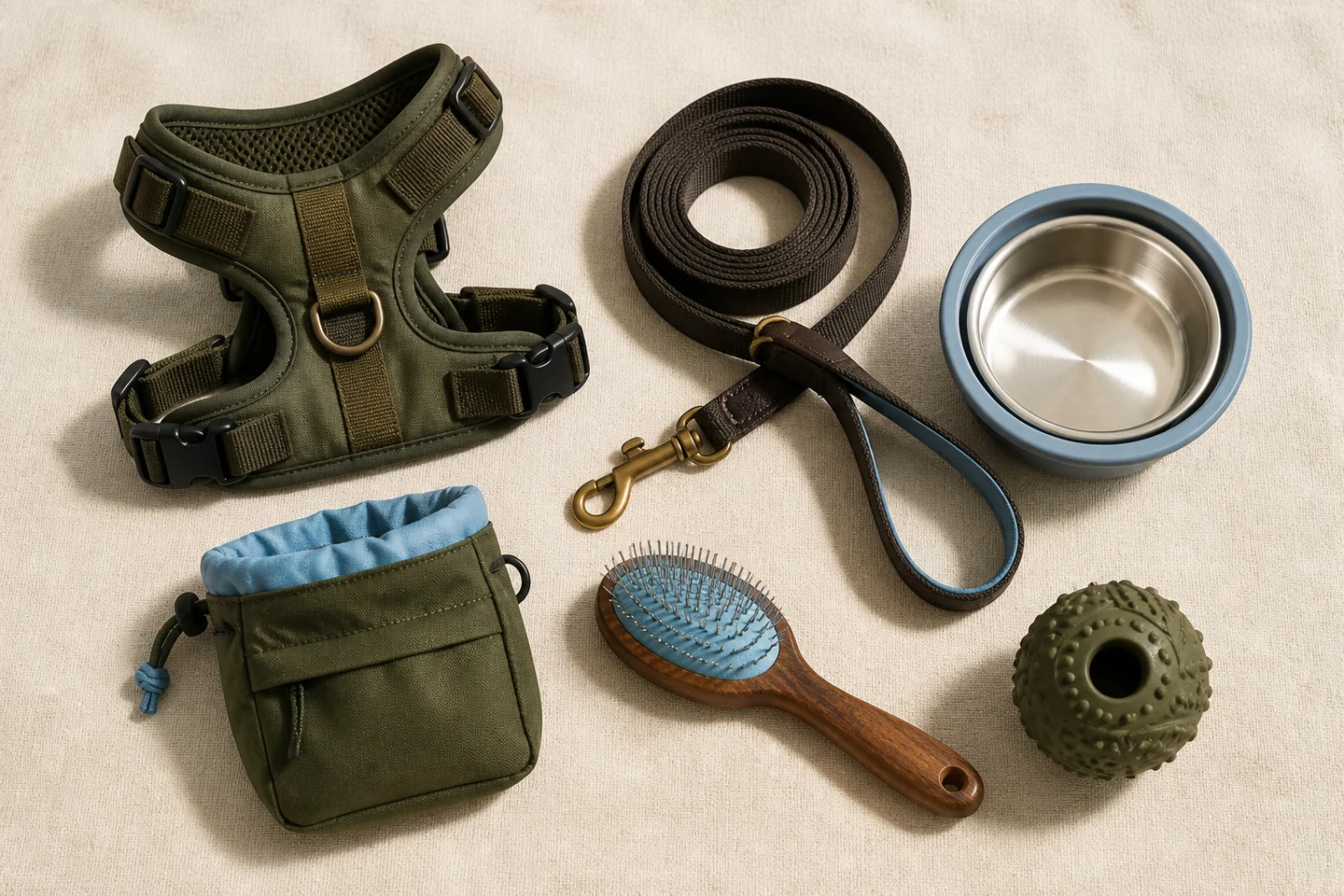
A practical starter collection might include a well-fitted collar or harness, identification, a standard leash, food and water bowls, a comfortable resting place, a grooming tool suited to the coat, waste bags, and a small rotation of safe toys.
Add specialized equipment only when a real need appears. This saves money, reduces clutter, and gives you time to learn what your dog prefers.
Inspect gear regularly
Look for worn stitching, cracked plastic, rust, sharp edges, stretched straps, and loose hardware. Replace safety-critical gear before it fails. Clean bowls and food-contact items frequently, and follow the manufacturer’s care instructions.
If you are unsure whether mobility, medical, training, or restraint equipment is appropriate for your dog, ask a qualified veterinarian or credentialed professional who can assess your individual situation.